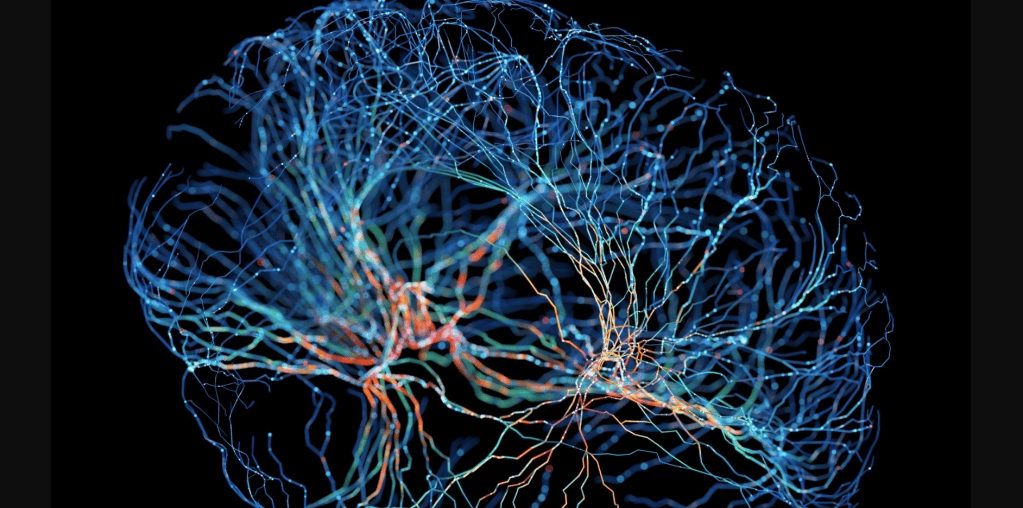
Neurodegenerative diseases are chronic conditions that affect the nervous system and harm parts of the brain. Such conditions which destroy your system and brain develop slowly, the effects tend to show up later. However, the term ‘Neurodegenerative’ doesn’t apply to one disease, it is an umbrella term for various other diseases. Some main types of neurodegenerative diseases include (but aren’t limited to): dementia-type, demyelinating, motor neuron, and prion diseases. Neurodegenerative diseases can also be genetic. This is especially known in Huntington’s Disease where it is caused by a gene mutation.
What Is the Neuron?
Neurons (also called nerve cells) are an essential part of the brain and nervous system. These neurons send signals all over the body as a way of communication and allow you to do basic behaviours such as breathing, walking, eating, talking, and thinking. These cells are responsible for receiving sensory input from the external world and sending signals from motor neurons to your muscles.
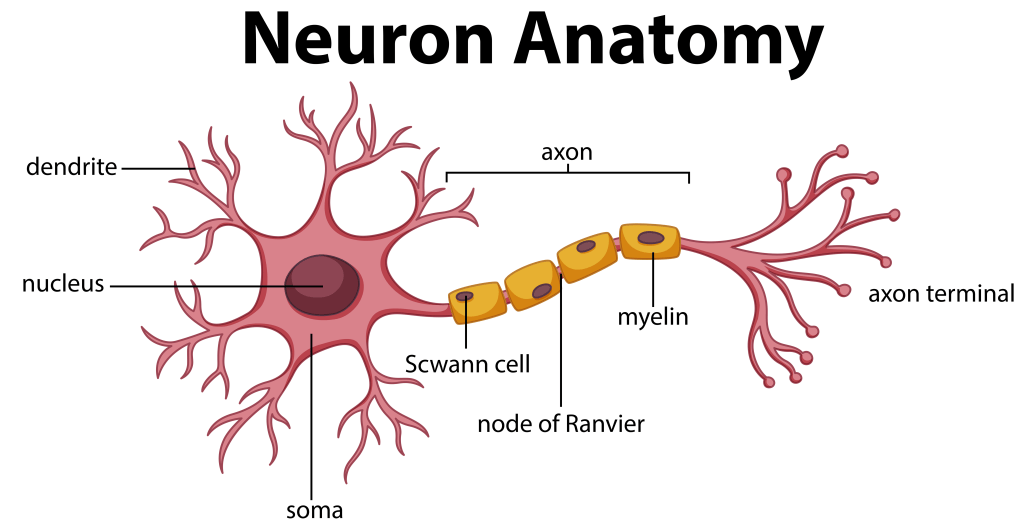
A neuron has three main parts to its anatomy: dendrites, an axon, and a cell body (soma).
A dendrite is where the neuron receives input signals from other cells.
The axon is the output of the neuron; when one neuron wants to send a message to another, it sends an electrical signal throughout the entire axon.
The soma is the place of the nucleus and where proteins are made to be transported around through the dendrites and the axon.
Dementia-Type Diseases
Dementia is a condition which causes progressive damage to parts of the brain, causing neurons in several areas to die. It can be caused by several diseases which over time will damage the brain and typically lead to deterioration in cognitive function beyond the expected symptoms of ageing. Neurons in several areas dying can then cause a wide range of symptoms depending on the area affected. It can affect memory, thinking, and the ability to perform daily tasks. Dementia-type diseases include conditions such as Alzheimer’s Disease, Lewy Body Dementia, and many others.
Alzheimer’s Disease
Alzheimer’s disease is the most common cause of dementia and symptoms most commonly occur at the age of 65. It is a neurological brain condition that slowly damages your thinking, memory, and learning skills; and in advanced stages, can cause dehydration, poor nutrition, or infection. These can result in death.
While there is no cure to Alzheimer’s disease, prescribed medicines may improve symptoms or slow down the decline in thinking and programs or services can help support people with Alzheimer’s.
Demyelinating Diseases
A condition that causes damage to the myelin in the brain, spinal cord, and nerves.
Myelin is a protective layer (sheath) made up of proteins and fatty substances over a group of nerve cells. It strengthens and allows electrical impulses to travel through the nerve cells
If you have a demyelinating disease, your body’s immune system will mistakenly attack the myelin sheath, changing the way the nerves communicate and function.
Examples of demyelinating diseases include multiple sclerosis, neuromyelitis optica (NMO), transverse myelitis, and more.
Multiple Sclerosis (MS)
Multiple Sclerosis is an autoimmune condition in which it affects your brain and spinal cord. With MS, your immune system mistakes your myelin cells for danger and attacks it. Damage to the myelin sheaths disrupts the signals your nerves send throughout your body to perform normal functions such as vision, sensation, and movement. Myelin damage can occur in your brain, spinal cord, and the nerves in your eyes.
There is no cure for MS, but treatment is available to slow down the process, minimise the damage, and help manage symptoms.
Motor Neuron Diseases (MND)
A condition that gradually destroys the motor neurons.
Motor neurons are nerve cells that control muscle movement involved in things such as talking, breathing, swallowing, and walking. If you have a motor neuron disease (MND), these motor neurons become damaged gradually over time, leading to disability of everyday functions and eventually resulting in death.
Neurons send messages to and from the brain. Upper motor neurons are the neurons in the brain that usually transmit these signals to the lower motor neurons in your spinal cord. This lets the muscles in your body move as your upper motor neurons tell your lower motor neurons to produce muscle movement.
When you have an MND, your motor neurons shut down. Because of this, your muscles don’t receive signals from your brain to move, and they begin to weaken and shrink in size or stiffness and overactive reflexes.
While this disease unfortunately has no cure, there are treatments to help manage the symptoms. Motor neuron disease (MND) are progressive diseases that get worse over time.
Examples of MND include amyotrophic lateral sclerosis (ALS), Progressive bulbar palsy (PBP), Post-polio syndrome (PPS), and more.
Prion Diseases
Prion disease is a very rare disease that can affect both humans and animals. This disease happens when normal proteins in the brain become abnormal proteins called prions. It causes brain damage which can lead into dementia and symptoms develop suddenly and progress quickly.
Prion diseases are a terminal illness, but healthcare workers focus on their treatments to manage the symptoms.
While prion diseases are rare, it’s still possible to get. You can get prion diseases through genetic inheritance or through infection of the disease. However, it is still possible to get the disease even without exposure to the disease or having a genetic mutation, researchers call this sporadic prion disease.
Note:
This is a project.
Bibliography:
Cleaveland Clinic. (2025, May 6). Motor neuron disease (MND): Symptoms & types. Cleveland Clinic. https://my.clevelandclinic.org/health/diseases/motor-neuron-disease-mnd
Cleveland Clinic. (2022, December 10). Alzheimer’s disease. Cleveland Clinic. https://my.clevelandclinic.org/health/diseases/9164-alzheimers-disease
Cleveland Clinic. (2023a). Neurodegenerative diseases. Cleveland Clinic. https://my.clevelandclinic.org/health/diseases/24976-neurodegenerative-diseases
Cleveland Clinic. (2023b, October 18). What is a demyelinating disease? Cleveland Clinic. https://my.clevelandclinic.org/health/diseases/demyelinating-disease
Cleveland Clinic. (2024a, January 21). Prion disease. Cleveland Clinic. https://my.clevelandclinic.org/health/diseases/prion-disease
Cleveland Clinic. (2024b, January 25). Multiple sclerosis. Cleveland Clinic. https://my.clevelandclinic.org/health/diseases/17248-multiple-sclerosis
Mayo Clinic. (2025, June 7). Dementia – symptoms and causes. Mayo Clinic. https://www.mayoclinic.org/diseases-conditions/dementia/symptoms-causes/syc-20352013
Mayo Clinic. (2026, August 1). Alzheimer’s disease – symptoms and causes. Mayo Clinic. http://mayoclinic.org/diseases-conditions/alzheimers-disease/symptoms-causes/syc-20350447
Multiple Sclerosis Australia. (2025). What is multiple sclerosis (MS)? MS Australia. https://www.msaustralia.org.au/what-is-multiple-sclerosis-ms/
National Institute of Environmental Health Sciences. (2022). Neurodegenerative diseases. National Institute of Environmental Health Sciences. https://www.niehs.nih.gov/research/supported/health/neurodegenerative
National Institute of Neurological Disorders and Stroke. (2025, February 25). Brain basics: The life and death of a neuron. NINDS. http://Www.Ninds.Nih.Gov. https://www.ninds.nih.gov/health-information/public-education/brain-basics/brain-basics-life-and-death-neuron
What is demyelination? (n.d.). Healthline. Retrieved September 4, 2026, from https://www.healthline.com/health/multiple-sclerosis/demyelination#symptoms
Woodruff, A. (2018). What is a neuron? The University of Queensland. The University of Queensland. https://qbi.uq.edu.au/brain/brain-anatomy/what-neuron
World Health Organization. (2025, March 31). Dementia. World Health Organization. https://www.who.int/news-room/fact-sheets/detail/dementia


Leave a Reply